
A PRACTICAL GUIDE
What does a toastmaster actually do?
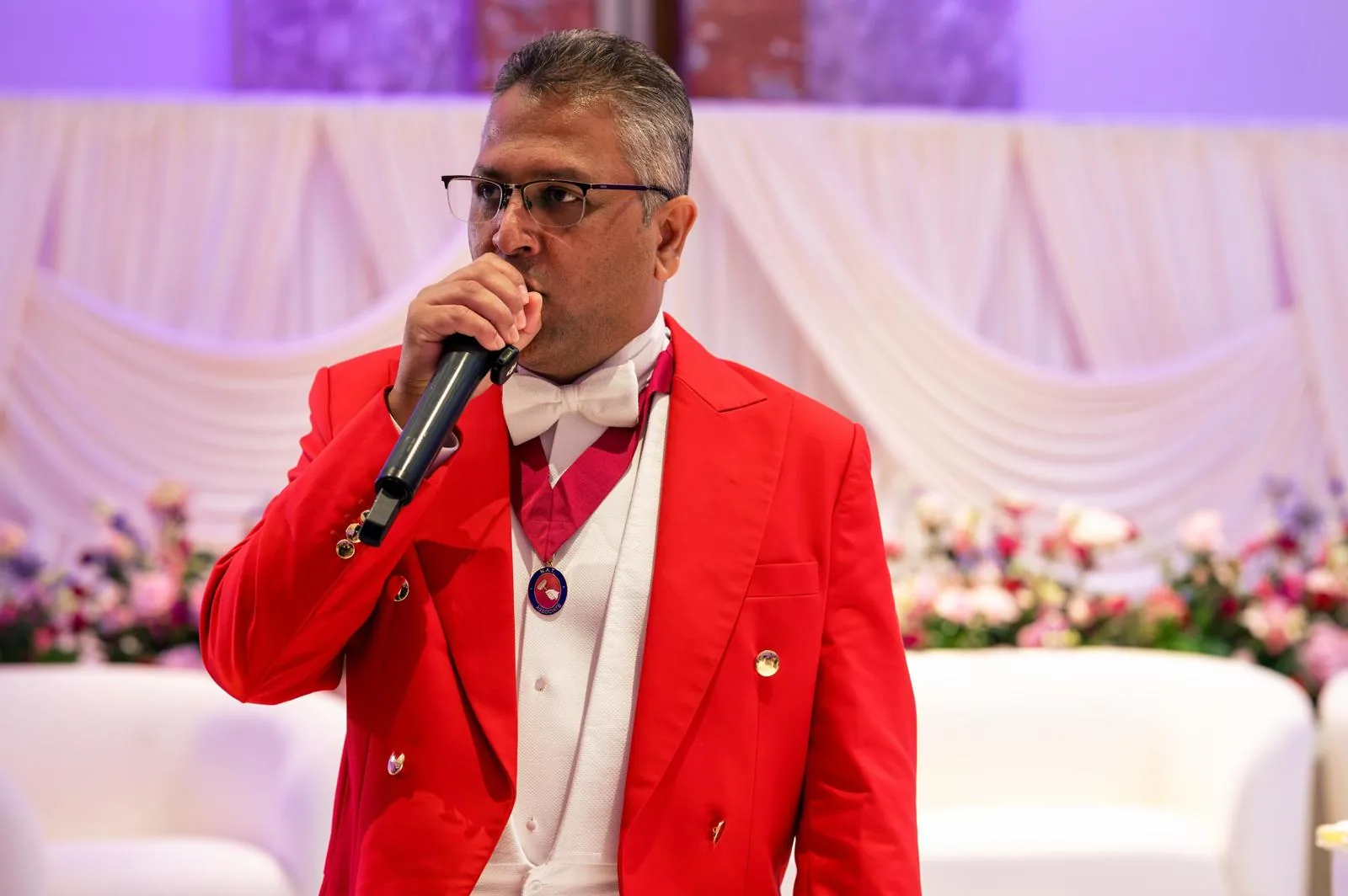
A great toastmaster supports the atmosphere as much as the schedule. They are there to guide guests, coordinate the details and create a confident sense of occasion, without taking over your day.
Before the event
Your toastmaster gets to know the plan: the venue, the timings, the key people, your suppliers and any traditions or sensitive details that require care.
During the event
They welcome guests, make announcements, manage key transitions, introduce speakers and help suppliers stay connected to the running order. Crucially, they also adapt when reality changes.
What they are not
A toastmaster is not a replacement for a wedding planner, venue coordinator, DJ or caterer. Each role has its place. The toastmaster helps them work together in the room.
Why it helps
When someone owns the flow, families can be guests and the couple can stay present. That is often the difference between a beautiful plan and a day that feels genuinely calm.
Still deciding whether you need one?
Ask Dips about your dayWhat thoughtful hosting looks like
Clear preparation gives everyone more room to celebrate.
Every occasion has its own energy. Some need a formal welcome and careful introductions; others need a little help drawing people together. Before your day, I take time to understand your people, venue, running order and the moments you want to protect. That includes the practical details, who is speaking, when suppliers need a cue and how guests will know what is happening next.
On your day, I use the plan as a guide rather than a script. If a speech runs long, a guest needs direction or a family moment needs a little space, I respond calmly so your celebration still feels considered. The aim is never to make the room feel controlled. It is to create enough clarity that guests can relax into the occasion.
You will always know what is included before confirming a booking. You can talk me through your requirements, timings and location, and the kind of presence that feels right for your event. If you are unsure whether a toastmaster or MC is right for your plans, an initial conversation is a helpful place to start. It is also where you can flag access needs, family expectations, sensitive announcements and the parts of the day you want to feel unhurried. This shared understanding helps everyone stay focused on the people and moments that matter if timings change.
A useful brief is built around your choices, not a stock event formula. You may have a particular order of entrance, a preferred way to introduce relatives, a point in the programme where a room needs to pause, or suppliers working to tight access windows. Sharing these details early means I can give the right cue at the right time and communicate in a way that feels natural to your guests. The result is a room that knows where it is going without being told how to celebrate.
Discuss your occasion